
And so, in February, from non-touristy Almeria to very-touristy-and-not-loving-it-exactly Malaga. The locals, that is who, the day we arrived, were protesting in the streets about the effects of over-tourism.
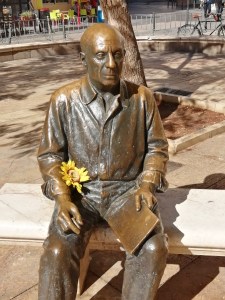
We sympathise, of course. Edinburgh is not without its issues in terms of Airbnbs, hollowing out of the central areas, overcrowded streets and rising prices, particularly during the Festival period in August, but basically year-round now (even the dreich weather doesn’t seem to keep them away). It’s a tricky one – the tourist industry, there as here, produces clear economic benefits including jobs, but it has its disbenefits too. All we could do was try to blend in, tip well, and leave as light a footprint on the local infrastructure as we could.
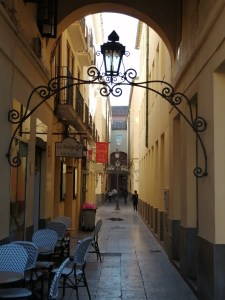 We stayed, as it turned out, pretty much in tourist central on Calle Granada, a very short step from El Pimpi and other well known tapas bars and restaurants. We really couldn’t have been better placed for eating and drinking. Apartamentos Libere Malaga Teatro Romano is more than decent accommodation, too, if a little corporate (they have apartments elsewhere in Malaga and various other Spanish cities, and everything is done by door codes with no onsite presence apart from friendly cleaners). I note the three Tripadvisor reviews are pretty negative, but we thought they were good value. We had a top floor booking, but even then the 3 a.m. street cleaning is pretty noisy (which I reckon would be the same most places in the area, tbh).
Anyway, if you don’t like busy streets, lively nightlife and a dazzling selection of places to
eat and drink, maybe Malaga’s not the place for you. What you could do is get the hell out of town, as we did on two separate days, and go to Pedregalejo.
Long term inmates of this blog may recall that I’ve blogged about this fishing village a couple of miles out of Malaga before, in 2014. Then, our friendly hostal owner had recommended it; ten years on, it’s still there and still just as great. So, to save you clicking through to the previous post if you don’t want to, here’s what you do: take a 3, and 8 or an 11 (I think the 34 also still does it) from Paseo del Parque, which forms part of the coast road that separates the main part of town from La Malagueta, and stay on it until Bolivia, Baños del Carmen at least (the next stop isn’t far away, although the bus may take a left at a fork in the road just after so you have further to walk down to the beach).
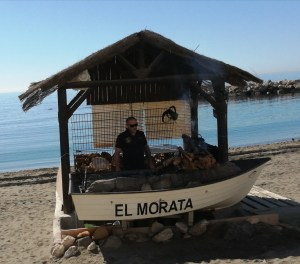
Assuming you’ve got off at Baños del Carmen, go down onto what is at first a fairly unprepossessing stretch of sand. Then, rounding a headland, you arrive at a boardwalk-lined stretch of restaurants (N.B. if you went a stop further, make sure you go right when you get to the beach – to the left is much more commercialised). These pretty much haven’t changed in the intervening ten years.
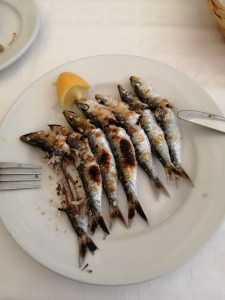
Our place of choice both times this trip was El Morata, family-run, with a good selection of seafood on offer to barbecue – apart from the sardines, I had monkfish skewers that were particularly good. They appreciate you trying to speak Spanish to them. We arrived quite early by local lunchtime standards, but that gave us a chance to chat up the guy doing the barbecuing, and to get our choice of table.
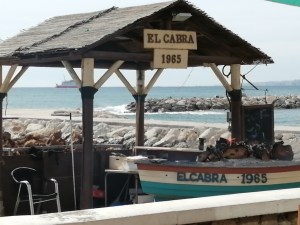
Perhaps inspired by the glass of verdejo, I told the waiter how perfect an experience it was: the barbecued fish, the wine, the sun… ‘and the paseo,’ he added. And he was right – peoplewatching, seeing and being seen, is a big part of the Spanish culture, and down on the boardwalk in Pedregalejo is no different. To really get this, you have to go there.
Going back, you walk up through the town to catch the bus on the other side of the road – I think they had separated the two carriageways since we were last there. One thing: at certain times of the day, these buses can get busy with schoolkids, so be warned!
Back in Malaga, there are as I say any number of eateries to command your attention. We
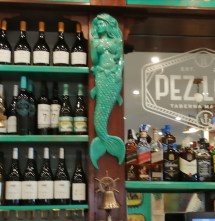
went to Los Marangos (C. Lario Molina) when we arrived, hot and thirsty, from the bus station, and went back a couple of times; it’s a chain, like Granier, a super baker just a couple of doors down from our apartment on C. Granada, which was top place for breakfast (even if they didn’t do tortilla española). We didn’t bother with Bar El Pimpi – too crowded – but two other places on Calle Granada worth a mention were Pez Lola, a mainly seafood joint, and Gloria.
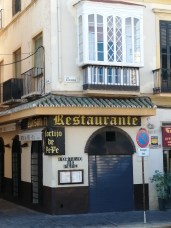 Pick of the lot for us was Cortijo de Pepe, at the corner of C. Granada and Plaza de la Merced. If you’re going in the evening, go earlyish and book your place at the bar, where you can watch your food being barbied (we see a pattern developing here, don’t we?) on the grill, or a la brasa, as they say round these parts. Great food and wine, although if you want red, see if you can ask for it ambiente or temperatura normal, as they stick it in the fridge, even in winter.
Lastly, La Malagueta, the port side of Malaga, is well worth a
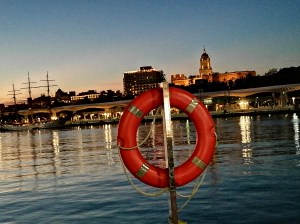
walk, especially at night when the sun sets over the harbour. We didn’t eat or drink there – lots of global brands on offer, which I guess will have paid for the harbour redevelopments – but still well worth the walk even for ageing anti-capitalists like me.
Malaga is a great place to visit, basically at any time of year. However, global warming may mean it’s going to get unbearably hot in summer. Global warming; cheap flights; mass tourism; yeah, I know. We’re going to have to do something about all of that, aren’t we?


All are captivating!❤️❤️
You were in food heaven! You mention monkfish in the article. Somewhere in the 1990s it began appearing in food stores and restaurants in my area. Then, maybe 15 years ago, monkfish disappeared from around here. Maybe it will re-emerge one day on my side of the Atlantic.I hope so.
I’m sure when I was a kid monkfish in Britain was seen as a nuisance that came up in the nets with the ‘finer’ species. Then some chef realised how good it was to cook with, and it’s now incredibly expensive. Not so much in Spain, thankfully!